Building a hotel is not just an architectural project — it's a long-term financial ecosystem that either generates profit or slowly drains years of effort, time, and capital. Success begins not with concrete and steel, but with vision, concept, and well-structured decisions.
Many hotel owners repeat the same mistake — they start construction before calculating profitability. The result? Inefficient design, extended ROI timelines, and financial stress that could have been avoided.
At HMG, we've identified the 10 most critical mistakes developers make during hotel construction — and how to avoid them.
1. Starting Construction Without a Business Plan or Market Analysis
If you don't know your target guest, expected ADR (Average Daily Rate), or seasonal occupancy trends — you're building blind. A data-driven market study reveals whether your project is viable, competitive, and profitable within its location.
2. Choosing the Wrong Location
Even the most stunning architecture loses its value in the wrong place. Location analysis should rely on hard data — tourist flows, accessibility, infrastructure, and seasonal dynamics. A poor location means lost guests, lower occupancy rates, and reduced return on investment.
3. Incomplete Budget Planning
Every project starts cheap and ends expensive — unless it's properly structured. Developers often underestimate pre-opening and operational expenses, which later trigger financial instability. Comprehensive CAPEX/OPEX models must cover all infrastructure, pre-opening, and operational costs.
4. Architectural Aesthetics Without Functional Logic
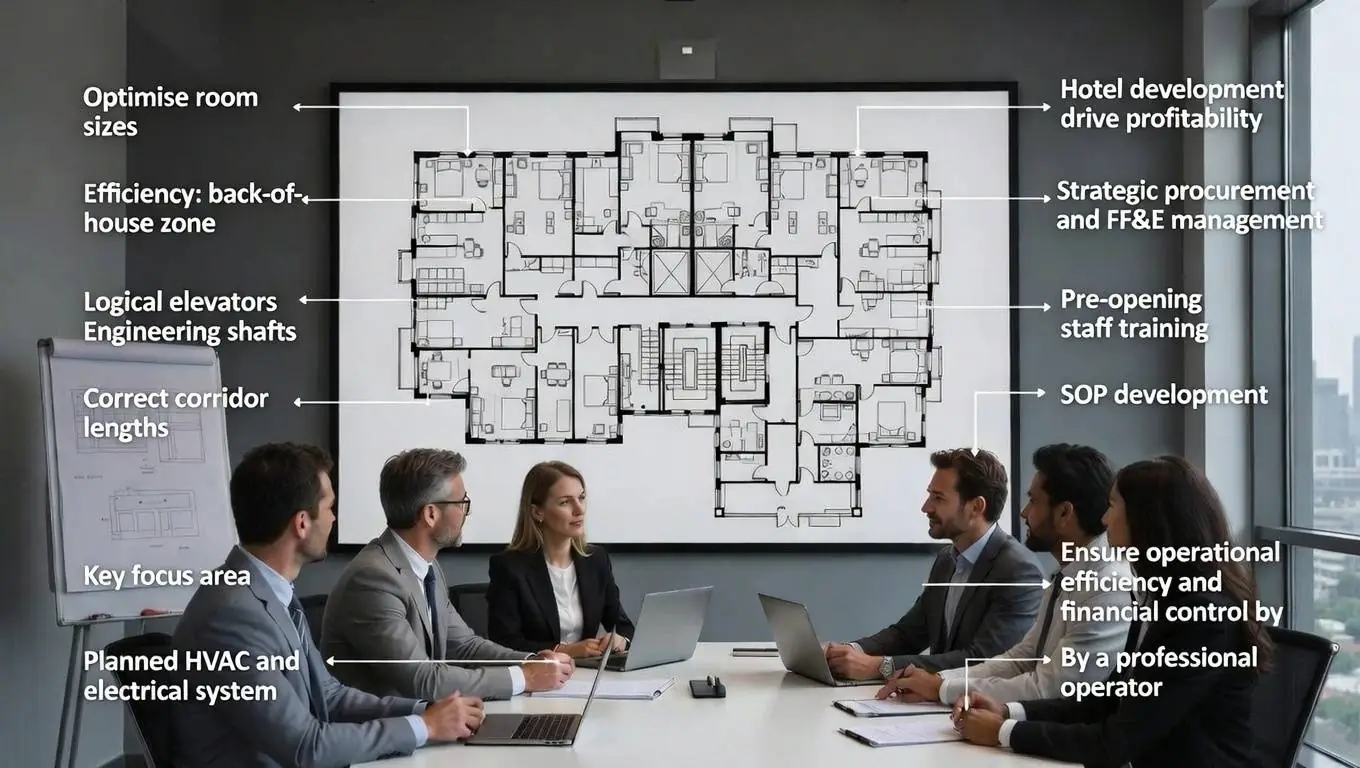
A visually impressive building that doesn't work operationally is a long-term liability. Smart planning means intuitive guest flow, efficient back-of-house logistics, and cost-effective daily operations.
5. Developing Without Professional Hotel Management Consultants
Hotel development is not a solo project — it's a coordinated team effort. Architects, engineers, operators, and management consultants must work in full alignment from the concept stage.
6. Poor Investment Structuring
Investors often fail to distinguish between CAPEX and OPEX, leading to unrealistic financial projections. A correct financial model accounts for not only construction costs, but also all pre-opening elements — marketing, staff training, IT systems, and operating reserves. Ignoring these factors can double your payback period.
7. Incorrect Room Mix and Typology
If your room types and sizes don't reflect market demand, you're losing both RevPAR (Revenue per Available Room) and total revenue potential. Room configuration must be guided by your target audience, competitor benchmarking, and pricing strategy.
8. Neglecting Energy Efficiency and Engineering Design
Well-planned engineering decisions save thousands in monthly operating costs. Energy-efficient HVAC, lighting, and water systems reduce long-term expenses. If sustainability isn't built into the project early, it will cost twice as much to fix later.
9. Ignoring International Standards
Branded hotels follow strict design and operational standards that minimize risk and optimize efficiency. Even independent hotels must align with global hospitality standards. Developing Standard Operating Procedures (SOPs) before opening ensures consistent quality and builds brand credibility.
10. Choosing the Wrong Management Partner
Even the most sophisticated property can fail under poor management. Your operator directly influences ADR, occupancy, operational efficiency, and ultimately your profit margins.
Final Thoughts
The hotel business demands more than capital — it demands strategy. Every decision made before construction defines your financial outcome for the next 10–15 years.